Blackboard Ultra: Content Editor (Add and Format Content)
TABLE OF CONTENTS
- About the Editor
- Work with Text
- Create Bulleted and Numbered Lists
- Create Tables
- Add Links to Online Content
- Upload Files and Attachments
- Add Images
- Add Media Content (Audio/Video)
About the Editor
The editor appears in most places where you can add content, including Ultra Documents, discussions, messages, announcements, and more. You may add and format text, embed images, attach files, upload videos via Katutura Media, and insert equations, links, and tables.
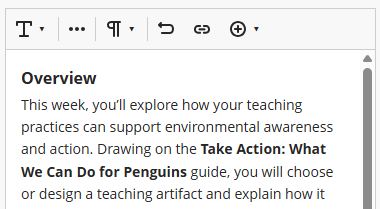
The text editor will adapt to your screen size and the text options may condense into menus..
Text editor on a standard screen:

Text editor on a small screen or mobile device:
For more information refer to the Content Editor support page or watch the Use the Content Editor tutorial video.
Work with Text
Use the text editor to format your text style, font, size, color, etc. You may add tables, format your paragraph, add lists (bullets, numbering, etc.), and more. The text editor will adapt to your screen size and the text options may condense into menus..
Clear Formatting
For the best results, type your text directly into the editor and use the text options to add your formatting.
You may copy and paste from a document (such as Microsoft Word), but this may cause formatting issues including jumbled fonts, odd spacing, sizing issues, etc. If you do copy and paste text into myLesley, select your text and use the Clear Format option to remove the formatting.
You will then need to reformat your content using the editor.

Text Styling (Headings and Fonts)
Use the Text Styling features to create headings, change the font, or change the text size and/or color.

When using headings, be sure to follow a logical and hierarchical order:
- Start with Title for a document title, Header for sections of the document, and Subheader for subsections of the document.
- Avoid skipping heading levels.
Refer to the Accessibility Checklist for more information.
Text Options (Bold, Italics, and More)
Use the Text Options to emphasize your text with bold, italics, underscore, and more. Click the three dots (...) button to open additional options.

Create Bulleted and Numbered Lists
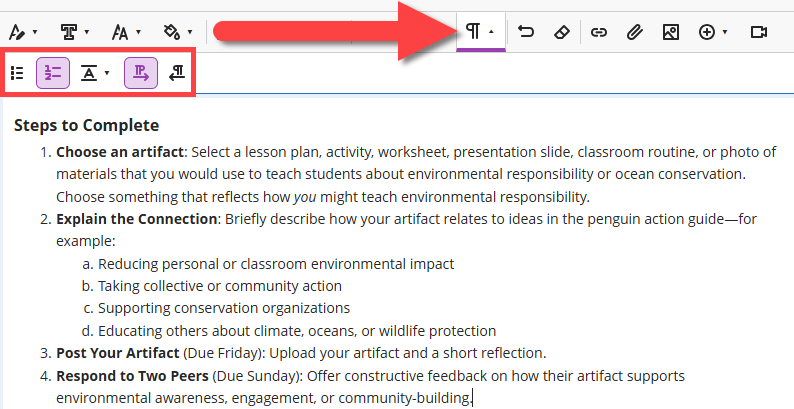
Use the Lists options to create bulleted and numbered lists, adjust line height options (single, double, etc.), and specify the text direction.
Create Tables
We recommend only using tables when needed to share complex information. Otherwise, consider presenting your content in a different way, such as bulleted or numbered lists.
If you do use a table, keep it simple, include a clear headings, and avoid empty cells to support readability and accessibility. Refer to the Accessibility Checklist for more information.
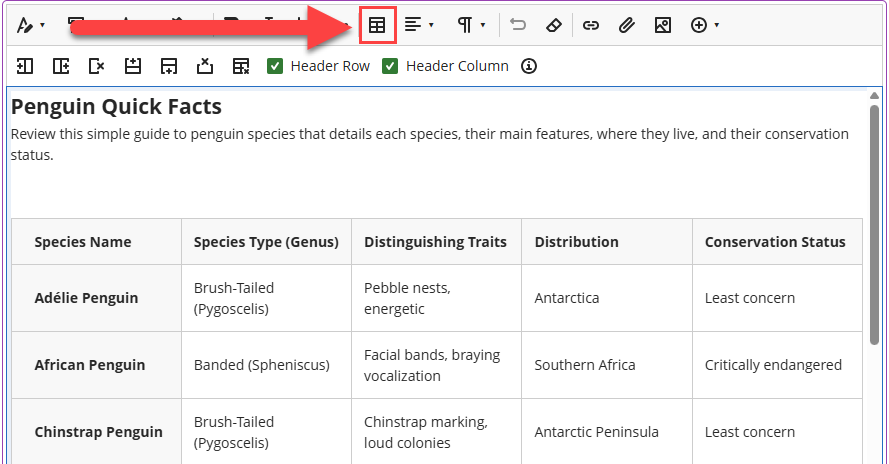
Click on the Table button to create and manage a simple table. Be sure to specify a clear Header Row and Header Column.
Add Links to Online Content
Use the Insert/Edit Link button in the editor to add links.
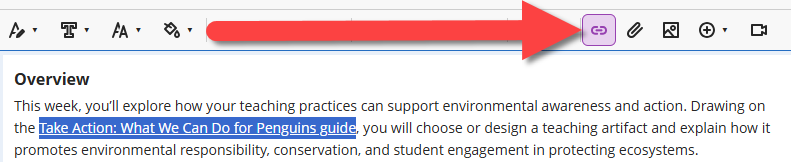
Enter or paste the link URL and add the link text.
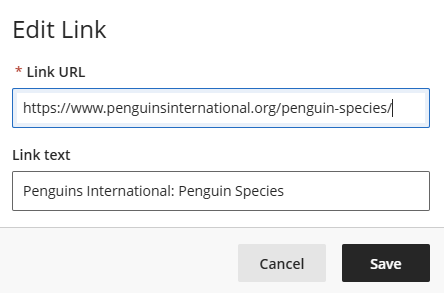
When creating a link you should ensure that your link text conveys clear and accurate information about the destination. For example, instead of linking to the text Click here, include the full title of the destination page, such as Lesley Support Hub. Refer to the Accessibility Checklist for more information.
Note: In order to link to content from the Lesley Library, you will need to use a permalink. This permalink will contain the Library's proxy prefix, so materials can be accessed off campus. For information about linking to Library resources, refer to the How to Link to Library Content Guide.
Upload Files and Attachments
You may upload files in the Content Editor. When you upload a file you have the option to give your students viewing and downloading privileges.
Supported File Types
You may upload many different files into Blackboard including:
- PDF Files
- Documents (DOC, DOCX)
- Presentations (PPT, PPTX)
- Spreadsheets (XLS, XLSX)
- Text files (RTF, TXT)
Files: Best Practices
- Media (audio and video files): Do not upload media files (audio or video) as an attachment. Refer to the Add Media Content section of this document for instructions.
- Scanned PDFs: When you scan a text, such as a book, journal article, newspaper article, etc., the resulting document is an image of the text. These scanned PDFs are considered completely inaccessible to all users. For more information, refer to Accessibility Checklist: Don't use scanned PDFs.
- Link to Online Content: Link to content that you find online (including journal articles and library resources). This helps to drive additional traffic to the site and show that the content is being used. Need help finding online resources? Have questions about fair use and copyright? Reach out to a librarian: asklib@lesley.edu!
- File Accessibility: Ensure that your file is accessible to all users. When creating your file, be sure to use proper headers and text styles, use the built-in formatting tools to create bulleted and numbered lists, ensure that tables follow a simple structure, and add alternative text to any images or visuals.
- Refer to the Accessibility Checklist for more information and detailed instructions.
- Utilize Ally to check the accessibility of your content and follow the instructions to fix any accessibility issues.
Attach Files
To attach a file, click on the Attachment button in the text editor.
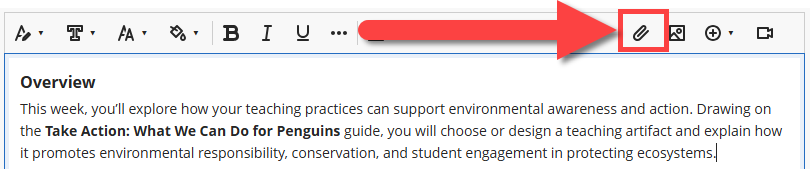
Select a file from your computer.
Note: Do not upload media files (ex video, audio) using the Attachment button! Refer to the Add Media Content section of this support article for instructions on uploading media or embedding online media.You will be prompted to edit the file options. You may change the display name and, if prompted, specify whether users have permission to only view the file, only download the file, or have the option to both view and download the file.
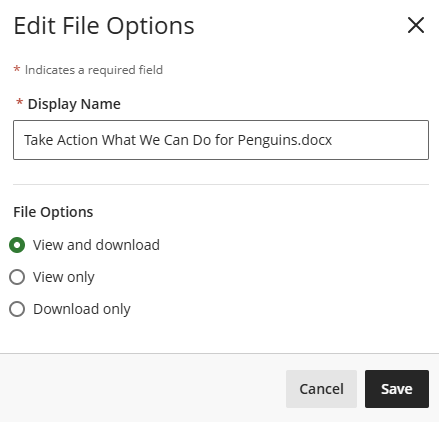
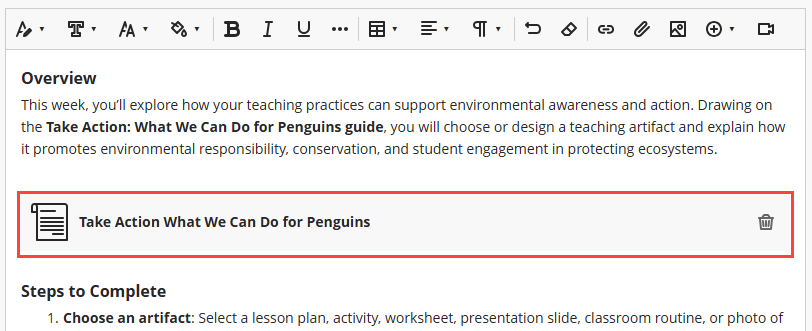
Click Save to save your changes and attach your file. Your attached file will appear inline with your text.
Add Images
You may add upload images from your computer, add royalty-free images from Unslplash (instructor only), or link to an existing image on the web (including cloud storage). You will have the option to change the aspect ratio and reposition the image before adding it. Once added to your content, you may resize the image. All images will be on their own line and centered on the page.
Upload Images From Your Computer
To upload an image from your computer, click the Image button.
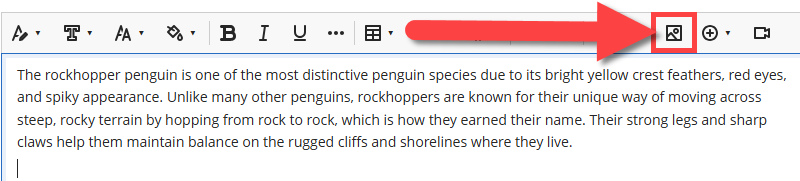
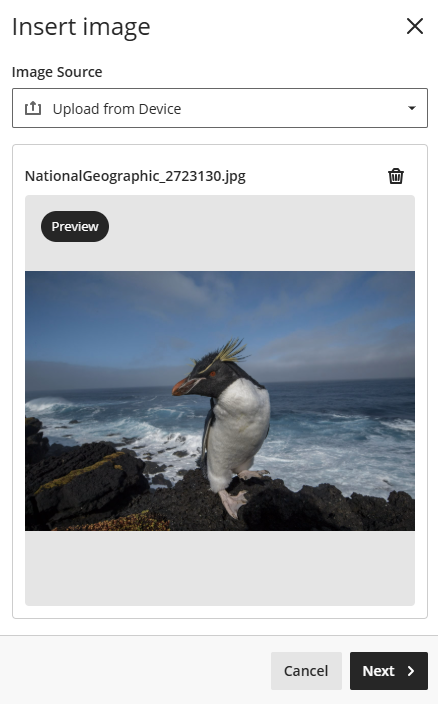
Drag an image file to upload or click Upload File to upload a file from your device.
- Acceptable file types: JPEG, PNG
- Maximum size: 10.24 MB

Preview your image and select Next to continue.
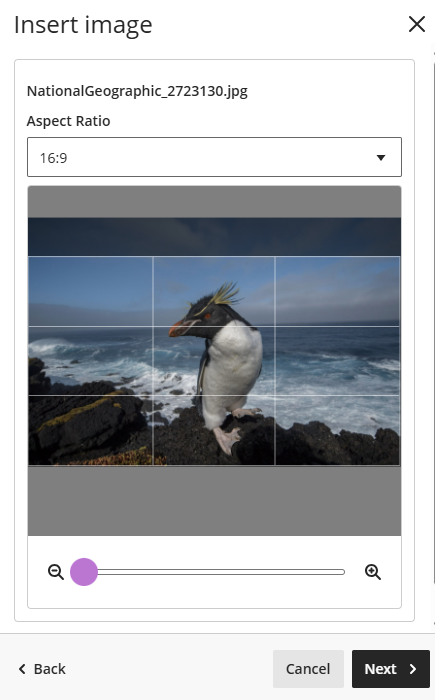
Use the drop-down menu to change your aspect ratio (original, square, portrait, landscape). Use the slider below the image or your arrow keys to reposition your image. Click Next to continue.
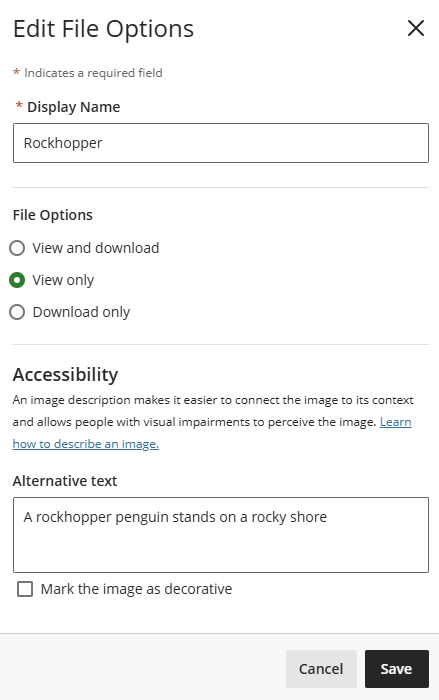
You will then be prompted to edit your file options. By default, the display name for the image is your file name, but you may edit it. Next, decide whether people may view and download your image, view only, or download only.
Finally, add alternative text to your image.
- Your alternative text should be a short description that accurately conveys the meaning and purpose of the image, rather than simply describing how the image looks.
- If the image is decorative and provides no meaning to your content, mark the image as decorative.
- Avoid using images containing text as the sole method of conveying information. If you must use the image, repeat the text in the alt text.
- Refer to the Accessibility Checklist for more information.
Click Save to save your changes and add your image.
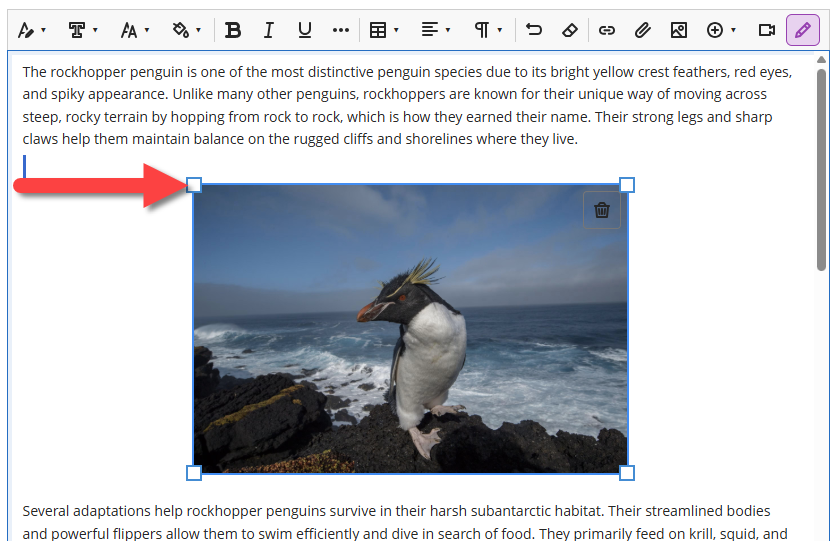
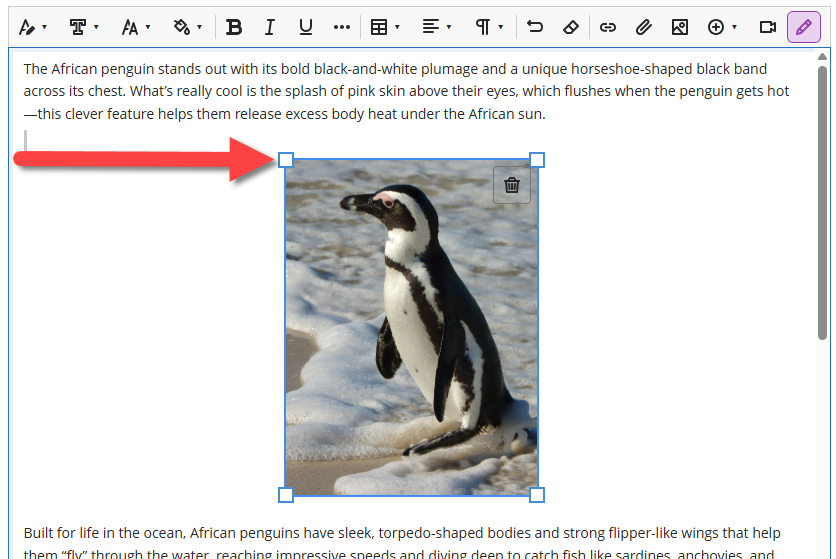
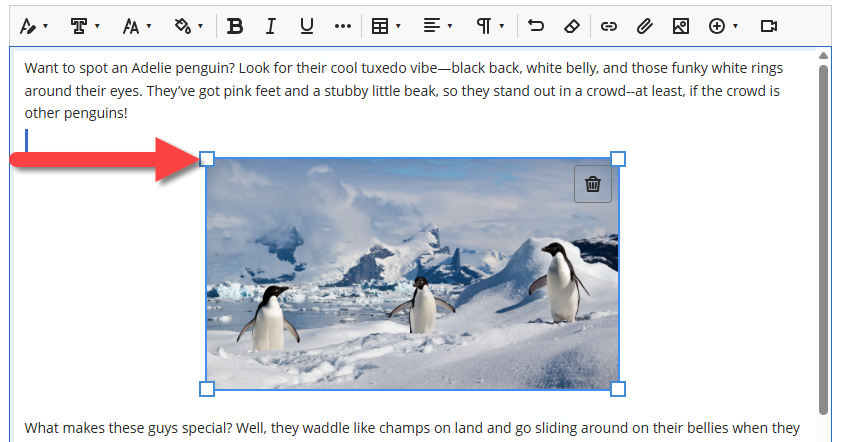
Once added to your content, you may resize the image by clicking on the image and dragging the boxes on the corners into your desired size. Your image will display on its own line and centered on the page. You may not align it to the left or right and you may not wrap text around it.
Add Images from Unsplash (Instructor Only)
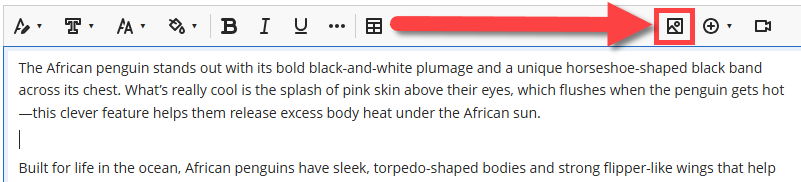
To upload an image from Unslplash, click the Image button.
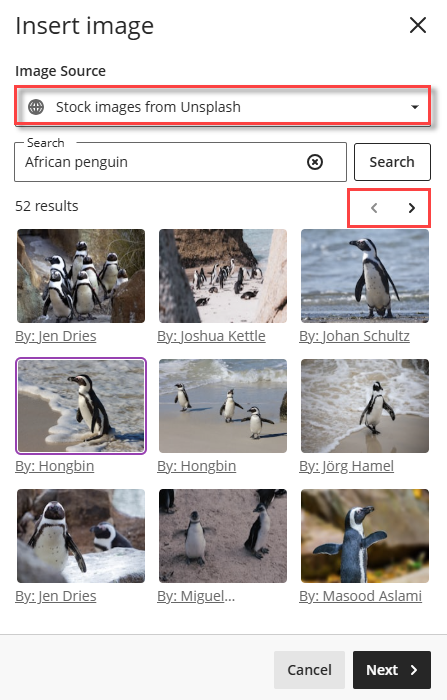
In the Image Source area, select Stock images from Unsplash and enter your search terms. You may use the arrow buttons to page through the options. Select the image you wish to use and click Next.
Use the drop-down menu to change your aspect ratio (original, square, portrait, landscape). Use the slider below the image or your arrow keys to reposition your image. Click Next to continue.
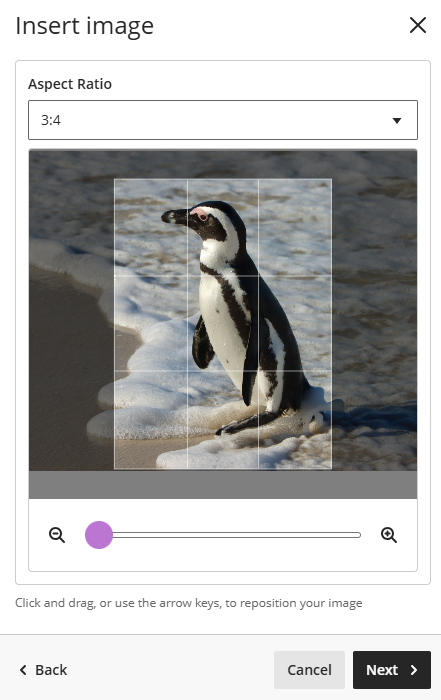
You will then be prompted to edit your file options. By default, the display name for the image is your file name, but you may edit it. Next, decide whether people may view and download your image, view only, or download only.
Finally, add alternative text to your image.
- Your alternative text should be a short description that accurately conveys the meaning and purpose of the image, rather than simply describing how the image looks.
- If the image is decorative and provides no meaning to your content, mark the image as decorative.
- Avoid using images containing text as the sole method of conveying information. If you must use the image, repeat the text in the alt text.
- Refer to the Accessibility Checklist for more information.
Click Save to save your changes and add your image.
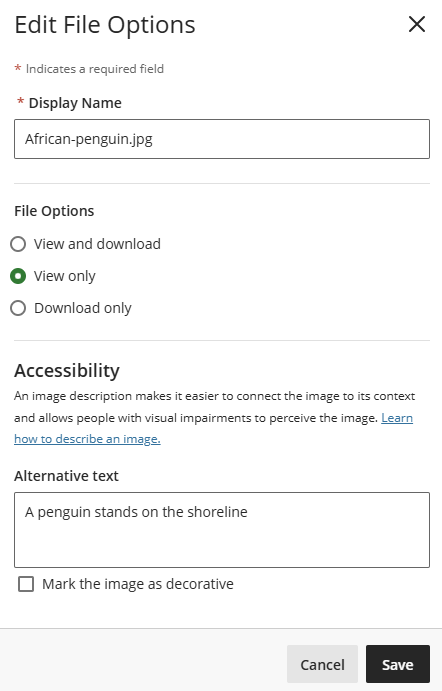
Once added to your content, you may resize the image by clicking on the image and dragging the boxes on the corners into your desired size. Your image will display on its own line and centered on the page. You may not align it to the left or right and you may not wrap text around it.
Add Online Images
You may add images from the web, including your cloud storage. However, use caution if you are not the owner of the site or the image, as web images may be changed or swapped without notice.
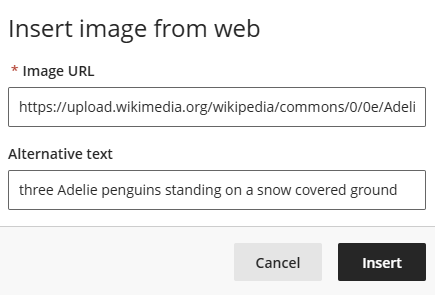
To add an image from the web, click the Add Content (+) button and then select Image from URL.
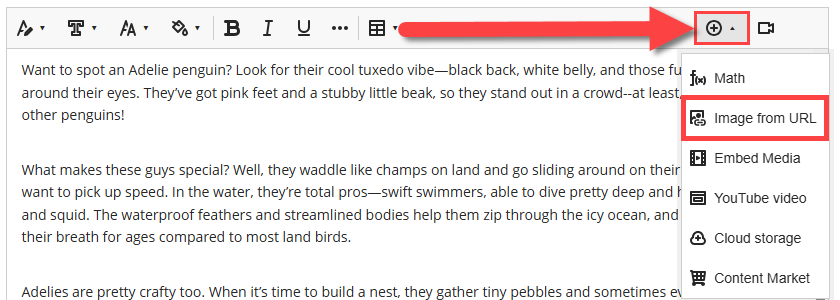
Type or paste your URL and include a brief description of the image in the Alternative Text box.
- Your alternative text should be a short description that accurately conveys the meaning and purpose of the image, rather than simply describing how the image looks.
- If the image is decorative and provides no meaning to your content, mark the image as decorative.
- Avoid using images containing text as the sole method of conveying information. If you must use the image, repeat the text in the alt text.
- Refer to the Accessibility Checklist for more information.
Click Insert to add your image.
Once added to your content, you may resize the image by clicking on the image and dragging the boxes on the corners into your desired size. Your image will display on its own line and centered on the page. You may not align it to the left or right and you may not wrap text around it.
Add Media Content (Audio/Video)
The best way to share media (video and audio content) will depend on whether it is media that you own or have created or media that others have created.
For detailed information about sharing media in your course, please refer to the Managing Media in myLesley support article.
Add Media You Created (Using Video Studio)
You may use Video Studio to upload media (video and audio) you have already created or use Video Studio to record a new video from your webcam and/or screen.
Locate the place where you want to add your media and click the Audio/Video button in the content editor.
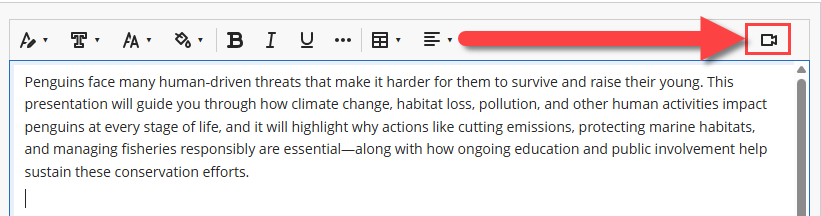
This will launch Video Studio. You may record your screen or select upload from device to upload media.
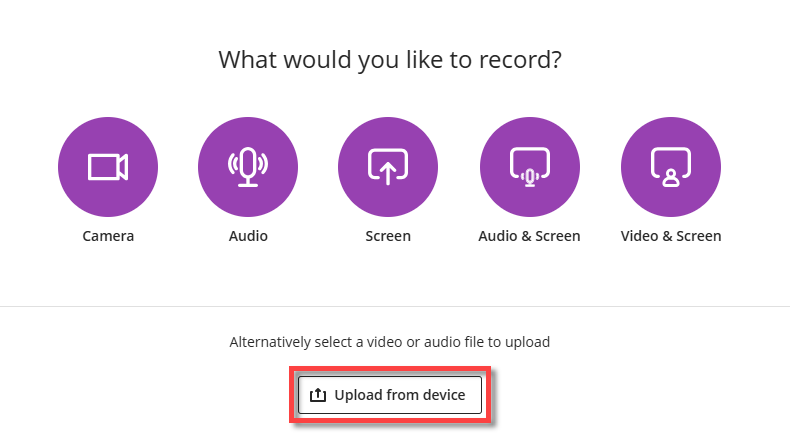
Once you have selected your file, your media will begin to upload. Depending on the size of your file and your connection speed, this may take several minutes.
As your media uploads, you may edit the media details including the Title, Description and, if available, Access Options. Once you have finished, click Save.
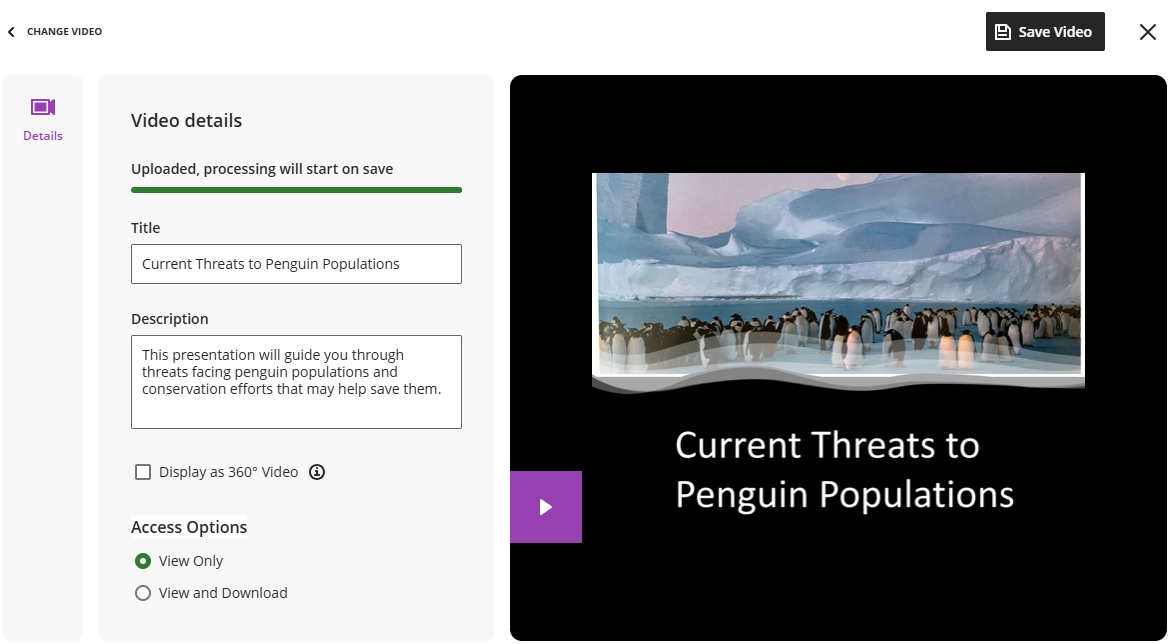
Your media will be embedded into your content. Make any other changes to your content and Save or Submit.
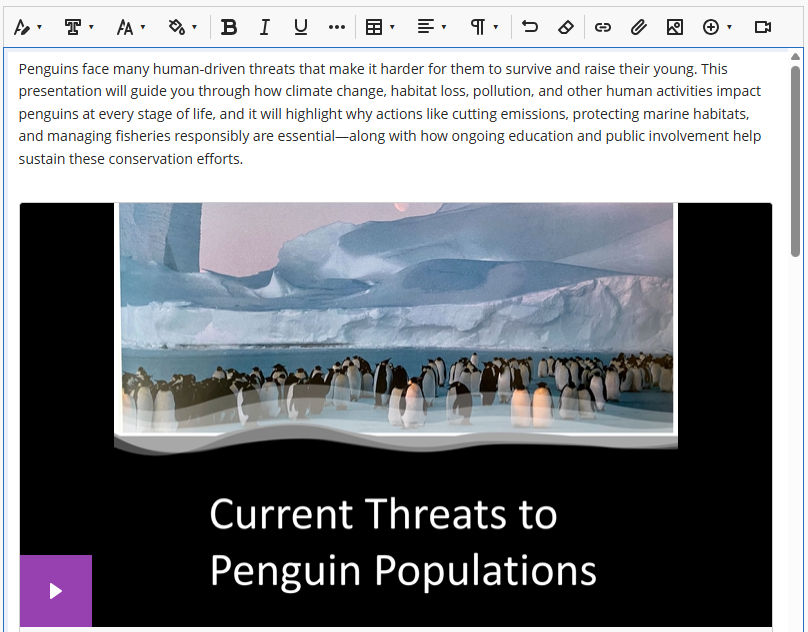
For additional instructions and resources, refer to the following support articles:
Add Media Created by Others
If you are not the creator of the media or do not have permissions from the publisher, you cannot upload the media into your course via Kaltura Media. This includes copies of DVDs that you have purchased. If the content exists on the web (ex YouTube, PBS, a library media database), you may embed it or link to it.
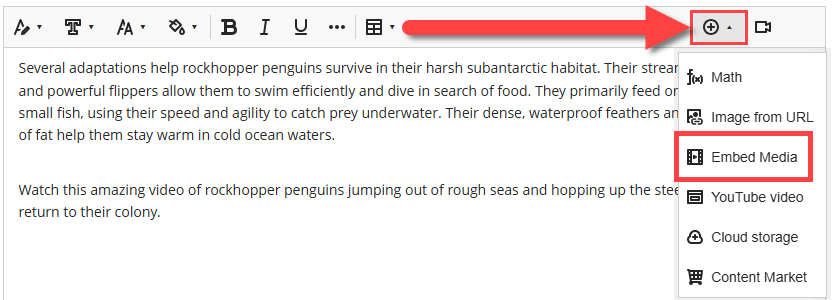
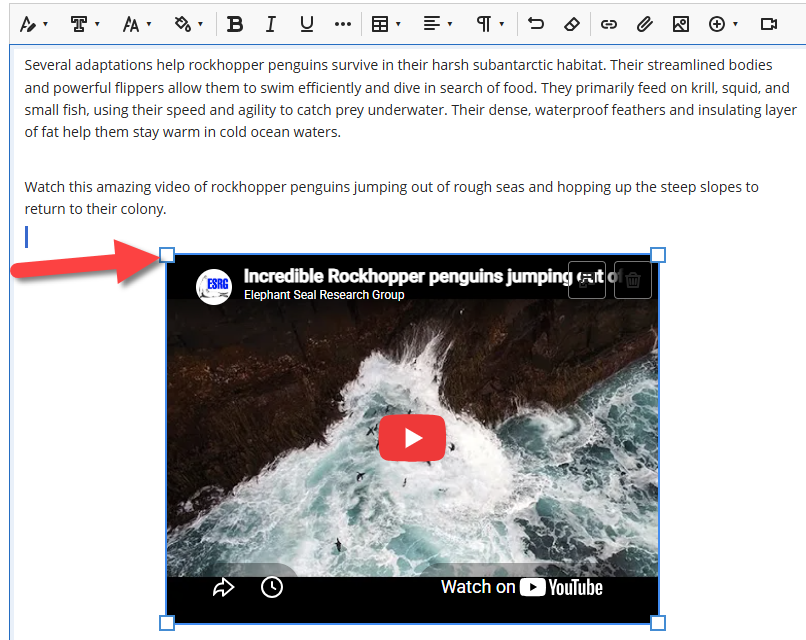
To embed online media, click on the Insert Content (+) button in the editor. From the list, select Embed Media.
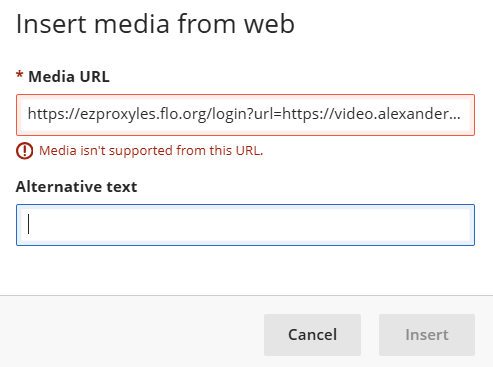
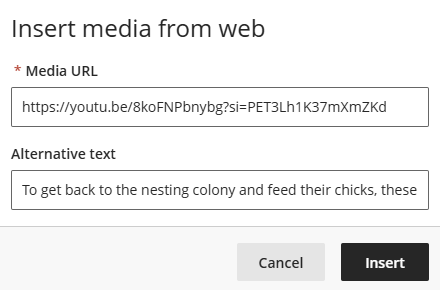
This will bring up a window. In the Media URL area, paste the URL of your media. In the Alternative Text area, add some information about your media. Click Insert to insert your media.
Once added to your content, you may resize your media by clicking on it and dragging the boxes on the corners into your desired size. Your media will display on its own line and centered on the page. You may not align it to the left or right and you may not wrap text around it.
If the media is unable to display inline, you will see a message saying "Media isn't supported from this URL." If this happens, you will need to add a link to your media.